


Question:
For the last few years, I have been experiencing androgenic alopecia (female pattern hair loss). I have seen multiple doctors/dermatologists, tried oral medications, topical medication, and even had multiple cycles of scalp injections. Despite this, the hair loss is continuing and has even worsened at times, with some periods of intense shedding called telogen effluvium. I am currently 26 years old and feel that my hair loss is a defect which is far beyond the norm for my age and gender. It has been a very large stressor for me and causes me to have low self-confidence. I got married a few years ago and we would like to start a family in sha Allah, but I have been worried about increased hair loss after pregnancy as well. I have considered hair transplant but was told by doctors that it is not currently an option for me.
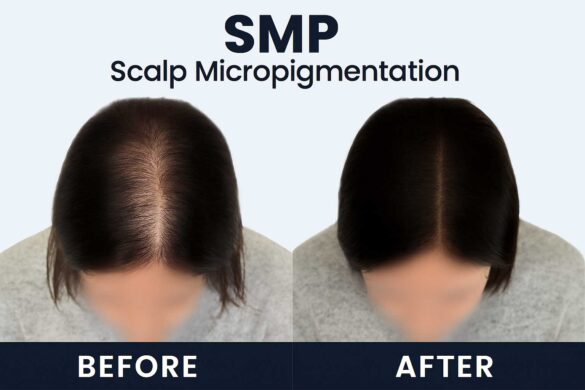
One of the only remaining options for me is a procedure called SMP (scalp micropigmentation), which covers up areas of hair thinning and baldness with small pigments. I was wondering if given my specific situation, would this be permissible? I wear a hijab outside the home and only wish to correct my hair loss for my husband, family, and my own self confidence.
Answer:
In the Name of Allah, the Most Gracious, the Most Merciful.
As salāmu ‘alaykum wa rahmatullāhi wa barakātuh.
Scalp micropigmentation is a procedure in which pigment is injected into the upper dermis of the scalp. This depth is shallower than standard tattoo ink. Thus, the pigments tend to fade and require touch-up every few years. In contrast, tattooing (al-washm) involves pigment trapping in the dermis fibroblasts and other cells, leading to permanent coloration. ‘Allāmah Ibn ‘Ābidīn described the process as piercing the skin with a needle and then filling it with pigment until it takes on the color.
In a hadith narrated by Muslim and others, a women came to ‘Abdullah ibn Mas’ūd rd asking why he cursed the women who tattoo. He indicated this prohibition is supported by both the Qur’an and Sunnah, explaining the Qur’an says, “Whatever the Messenger gives you, take it. And whatever he forbids you from, leave it.” (59:7) and the Prophet ﷺ said, “Allah has cursed the women who tattoo and the women who seek to be tattooed, the women who pluck eyebrows and the women who have their eyebrows plucked, and the women who file their teeth for beauty—those who alter the creation of Allah.”[1] In a variation of this hadith narrated by Imam Aḥmad in his Musnad, Ibn Masʻūd rd states, “I heard the Messenger of Allah ﷺ forbid the one who plucks eyebrows, the one who files teeth, the one who adds hair, and the one who tattoos — except in the case of illness.”[2]
Note, the Prophet ﷺ clarifies the ratio legis (ʻillah) for this prohibition as altering the creation of Allah and mentions illness as an exception. A further explanation is found in Fatḥ al-Mulhim:
His ﷺ statement “those who alter the creation of Allah” is an allusion to the verse in Sūrat al-Nisāʾ (4:118–119), quoting the words of Shayṭān, “I will surely take hold of a certain number of Your servants. I will certainly mislead them and delude them with empty hopes. Also, I will order them and they will slit the ears of cattle1 and alter Allah’s creation.”
In this is an explicit indication that hair extensions, tattooing, plucking, and the like are included among altering the creation of Allah that a person does under Shayṭān’s enticement, and which Allah Most High forbade in His Glorious Book.
Al-Qurṭubī said in his Tafsīr (5:392): “Then it was said: this prohibition only applies to what remains permanently, because that is in the category of altering the creation of Allah. As for that which does not remain permanently—like kohl, and women beautifying themselves with it—the scholars have permitted it, including Mālik and others. Mālik disliked it for men. Mālik also permitted a woman to stain her hands with henna.”
The upshot: everything that is done to the body by way of addition or removal for the sake of adornment, in a way that the addition or removal remains with the body, and such that it appears as if it were part of the original creation—this is deception and altering, which is prohibited. As for what a woman uses to beautify herself for her husband, like reddening the hands, lips, or cheeks, when it is not confused with the original creation, this is not included in the prohibition according to the majority of scholars. As for cutting off an extra finger and the like, this is not altering the creation of Allah; rather, it is the removal of a defect or disease, and the majority of scholars permitted it, contrary to some.[3]
Some points:
Scalp micropigmentation has similarities with traditional tattooing in its method and appearance. However, it is notably different in that it is semi-permanent.
In the questioner’s scenario, deception is not present as the husband is aware of the condition and procedure.
At the questioner’s young age, such hair loss is an unusual defect because of androgenic alopecia, requiring medical treatment to return the scalp to a normal appearance.
Thus, when other permissible treatments have been exhausted, scalp micropigmentation is permissible for early female hair loss when the treatment is known by her husband.[4]
And Allah taʻālā knows best,
Dr. Mawlana Mateen Khan
New Jersey, USA
Checked and Approved by:
Mufti Faisal bin Abdul Hamīd al-Mahmudi
Darul Iftaa Canada (fatwa.ca)
[1] الصحيح لمسلم، مسلم بن الحجاج أبو الحسن القشيري النيسابوري، دار إحياء التراث العربي (الشاملة)، 3:1678
(2125) حدثنا إسحاق بن إبراهيم، وعثمان بن أبي شيبة – واللفظ لإسحاق -، أخبرنا جرير، عن منصور، عن إبراهيم، عن علقمة، عن عبد الله، قال: «لعن الله الواشمات والمستوشمات، والنامصات والمتنمصات، والمتفلجات للحسن المغيرات خلق الله» قال: فبلغ ذلك امرأة من بني أسد يقال لها: أم يعقوب وكانت تقرأ القرآن، فأتته فقالت: ما حديث بلغني عنك أنك لعنت الواشمات والمستوشمات، والمتنمصات والمتفلجات، للحسن المغيرات خلق الله، فقال عبد الله: «وما لي لا ألعن من لعن رسول الله صلى الله عليه وسلم؟ وهو في كتاب الله» فقالت المرأة: لقد قرأت ما بين لوحي المصحف فما وجدته فقال: ” لئن كنت قرأتيه لقد وجدتيه، قال الله عز وجل: {وما آتاكم الرسول فخذوه وما نهاكم عنه فانتهوا} [الحشر: 7] ” فقالت المرأة: فإني أرى شيئا من هذا على امرأتك الآن، قال: «اذهبي فانظري»، قال: فدخلت على امرأة عبد الله فلم تر شيئا، فجاءت إليه فقالت: ما رأيت شيئا، فقال: «أما لو كان ذلك لم نجامعها»
[2] مسند الإمام أحمد بن حنبل، مؤسسة الرسالة (الشاملة)، حديث 3945
حدثنا عبد الوهاب بن عطاء، أخبرنا سعيد بن أبي عروبة، عن قتادة، عن عزرة، عن الحسن العرني، عن يحيى بن الجزار، عن مسروق، أن امرأة جاءت إلى ابن مسعود، فقالت: أنبئت أنك تنهى عن الواصلة؟ قال: نعم، فقالت: أشيء تجده في كتاب الله، أم سمعته من رسول الله صلى الله عليه وسلم؟ فقال: أجده في كتاب الله، وعن رسول الله، فقالت: والله لقد تصفحت ما بين دفتي المصحف، فما وجدت فيه الذي تقول قال: فهل وجدت فيه: {ما آتاكم الرسول فخذوه وما نهاكم عنه فانتهوا} [الحشر: 7] ، قالت: نعم، قال: فإني سمعت رسول الله صلى الله عليه وسلم ” نهى عن النامصة والواشرة والواصلة والواشمة إلا من داء “، قالت المرأة: فلعله في بعض نسائك؟ قال لها: ادخلي، فدخلت ثم خرجت، فقالت: ما رأيت بأسا، قال: ما حفظت إذا وصية العبد الصالح: {وما أريد أن أخالفكم إلى ما أنهاكم عنه} [هود: 88]
[3] موسوعة فتح الملهم، الشيخ شبير أحمد العثماني، دار إحياء التراث العربي، 4:169
قوله: (المغيّرات خلق الله) إشارة إلى قوله تعالى في [سورة النساء: ١١٨–١١٩] حكاية عن قول الشيطان: ﴿لَأَتَّخِذَنَ مِن عِبَادِكَ نَصِيبًا مَّفْرُوضًا، وَلَأُضِلَّنَّهُمْ وَلَأُمَنِّيَنَّهُمْ وَلَآمُرَنَّهُمْ فَلَيُبَتِّكُنَّ ءَاذَانَ الْأَنْعَامِ، وَلَآمُرَنَّهُمْ فَلَيُغَيِّرُنَّ خَلْقَ اللّهِ﴾. وفيه تصريح بأن الوصل والوشم والنمص وغيرها من جملة تغيير خلق الله الذي يفعله الإنسان بإغواء من الشيطان، والذي نهى عنه الله سبحانه وتعالى في كتابه المجيد.
وقال القرطبي في تفسيره (٥: ٣٩٢): «ثم قيل: هذا المنهي عنه إنما هو فيما يكون باقياً، لأنه من باب تغيير خلق الله تعالى. فأمّا ما لا يكون باقياً، كالكحل والتزيّن به للنساء فقد أجازه العلماء مالك وغيره، وكرهه مالك للرجال، وأجاز مالك أيضاً أن تشي المرأة يديها بالحنّاء».
والحاصل: أن كل ما يفعل في الجسم من زيادة أو نقص من أجل الزينة بما يجعل الزيادة أو النقصان مستمراً مع الجسم وبما يبدو منه أنه كان في أصل الخلقة هكذا فإنه تلبيس وتغيير منهي عنه. وأمّا ما تزينت به المرأة لزوجها من تحمير الأيدي، أو الشفاه أو العارضين بما لا يلتبس بأصل الخلقة، فإنه ليس داخلاً في النهي عند جمهور العلماء. وأما قطع الإصبع الزائدة ونحوها فإنه ليس تغييراً لخلق الله، وإنه من قبيل إزالة عيب أو مرض، فأجازه أكثر العلماء خلافاً لبعضهم.
[4] في شرح هذا الحديث قال علامة ابن عابدين في حاشيته على الدر (6\373) تصريحا على إستحباب التزيين لزوجها وإزالة عيب ومرض:
النمص: نتف الشعر ومنه المنماص المنقاش اهـ ولعله محمول على ما إذا فعلته لتتزين للأجانب، وإلا فلو كان في وجهها شعر ينفر زوجها عنها بسببه، ففي تحريم إزالته بعد، لأن الزينة للنساء مطلوبة للتحسين، إلا أن يحمل على ما لا ضرورة إليه لما في نتفه بالمنماص من الإيذاء. وفي تبيين المحارم إزالة الشعر من الوجه حرام إلا إذا نبت للمرأة لحية أو شوارب فلا تحرم إزالته بل تستحب اهـ،
وهكذا قال الامام الطحطاوي في شرحه على الدر (11\115):
قال بعض شراح ((الجامع الصغير)) للسيوطي: يقال إن النماص مختص بإزالة شعر الحاجبين؛ ليرققهما أو يسوّيهما، وهو حرام، وفي حديث: ((لعن الله القاشرة والمقشورة))(٢) أي: التي تقشر وجهها، أو وجه غيرها بالحمرة، أو المستعملة في وجهها حسن يوسف ليصفو لونها، والمقشورة التي يفعل بها ذلك كأنها تقشر أعلى الجلد.
قال بعض من كتب عليه: ويجوز الْحَفّ وَالتَّحْمِير وَالنَّقيش وَالتَّطْرِيف بإذن الزوج لأنه من الزينة، ويجوز الوصل بشعر غير آدمي بإذن الزوج، انتهى.
وظاهر هذا التقييد أن الحرمة مختصة بما إذا كان بغير إذن الزوج ويمكن حمل المذهب عليه؛ لأنه لا ينكر أن النمص، وهو التحفيف من الزينة، والزينة من المرأة مأمور بها شرعًا، وليحرر! ثم رأيت في ((المجتبى)): ويأخذ من حاجبه وشعر و جهه ما لم یشبه وجه المخنثین، انتهی.
احسن الفتاوى ۸:۷۵
عورت کا چہرے کے بال صاف کرنا
سوال : عورت کے لئے چہرے کے بال صاف کرنا جائز ہے یا نہیں ؟ حدیث میں نامعہ او متنمصہ پر لعنت وارد ہوئی ہے، اس سے کیا مراد ہے ؟ بینوا توجروا۔
الجواب باسم ملهم الصواب:
عورت کے لئے چہرے کے بال صاف کرنا جائز ہے، اور اگر ڈاڑھی یا مونچھ کے بال نکل آئیں تو ان کا ازالہ مستحب ہے۔
نا مصہ اور متنمصہ پر لعنت کا مورد یہ ہے کہ ابرو کے اطراف سے بال اکھاڑ کر باریک دھاری بنائی جائے کما یدل عليه التعليل بتغيير خلق الله. ابرد بہت زیادہ پھیلے ہوئے ہوں تو ان کو درست کر کے عام حالت کے مطابق کرنا جائز ہے۔ غرضیکہ ترین مستحب ہے اور ازالہ عیب کا استحباب نسبتہ زیادہ مؤکد ہے اور تلبیس و تغییر خلق نا جائز ہے۔